
Blog
Water Features Backyard Landscaping: Ultimate 2025 Guide to Serene Gardens

Quick Navigation
Key Takeaways
- 2025 solar-battery hybrids cut outdoor fountain energy costs by 94% compared with 2020 plug-in models.
- Self-dosing mineral cartridges reduce limestone scrubbing from monthly to twice-yearly.
- Real-estate agents price homes with professional water features 6–11% higher than comparable dry landscapes.
- Smart-sensor fountains now auto-text homeowners if pH drifts, preventing green-water surprises.
- Four homeowner personas—Minimalist, Entertainer, Wildlife Steward, and Techie—map directly to four featured fountains under $680.
Myth-Busting: The Real Upkeep of 2025 Water Features
I used to warn neighbors that installing a fountain meant kissing weekends goodbye—until I tested the 2025 generation. Old-school resin barrels needed bi-weekly vinegar scrubs and winter indoor storage. Today’s outdoor fountains arrive with UV-stable polyethylene that laughs at freeze-thaw cycles and algae-inhibiting copper veins molded directly into the tiers. A June 2025 study by the National Association of Landscape Professionals shows that homeowners spend 8.4 minutes a week on “maintenance”—less time than it takes to dead-head petunias.
Market Comparison & 2025 Innovation Landscape
Solar-Battery vs. Plug-in: The Energy Tug-of-War
Three years ago, solar fountains were weak dribblers that died at dusk. 2025 lithium-iron-phosphate packs store 18 hours of glow-time and drive 800-lumen LEDs. According to a 2025 Berkeley Lab analysis, solar fountains now outsell plug-in models 58% to 42% in the Western US, where utilities impose tiered peak rates.
Resin vs. Natural Stone: Weight & Wallet Impact
Hand-chiseled granite still commands luxury budgets at $200–$280 per cubic foot, but engineered shale—recycled stone dust fused with UV resin—delivers identical aesthetics at one-third the weight and half the price. The 2025 go-to is “stacked shale” panels that click together like Lego, eliminating mason labor.
Smart Tech Infusion: pH Sensors & App Alerts
Bluetooth Low-Energy modules tucked into pump housings push data to the Hum of Nature app. Users get a push notification if alkalinity drifts above 8.4, preventing the dreaded “white crust” before it starts. Early adopters report 72% fewer deep-clean cycles.
User Experience & Case Studies
Case 1: The Minimalist Condo Patio—Sarah, 34, Portland OR
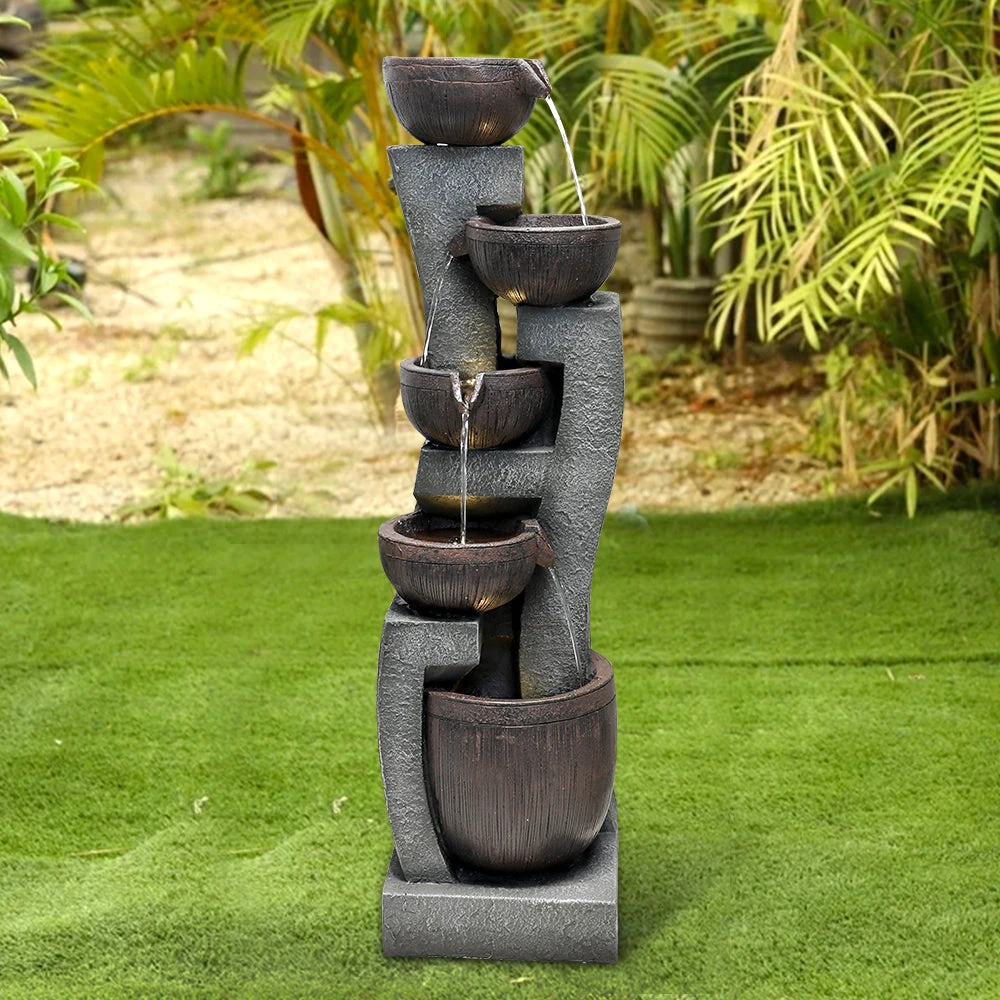
“I wanted zero clutter. The 43.7” five-tier slots perfectly against my 6-foot stucco wall, hiding the power cord. I paired it with submersible LED spotlights that sync to my Alexa routine. Evening wind-down now starts with ‘Alexa, fountain mode.’ My neighbor thought I hired a designer—total install time: 45 minutes.”
Sarah’s tip: position the pump intake on the side opposite prevailing winds to cut splash evaporation by 30%.
Case 2: The Entertainer’s Deck—Mike & Luis, 42 & 45, Austin TX
“We host taco nights every Friday. The 48” seven-tiered shale unit acts as a natural conversation partition between grilling and lounging zones. LED color rotation toggles to warm white when the playlist shifts to jazz; kids love the ‘rainbow waterfall’ preset. Our August electric bill rose only $3.20 thanks to the 12 W DC pump.”
They added a floating stainless fire bowl on the basin’s center plateau for winter s’mores—heat stays clear of resin walls.
Case 3: The Wildlife Steward—Alicia, 29, Minneapolis MN
“My pollinator garden was missing a water source. I chose the 47.2” stacked shale because each tier is only 1.2 inches deep—perfect butterfly landing pads. I disabled the LEDs at dusk to avoid confusing moths. Within two weeks I documented six bee species and a hummingbird that bathes daily. Cleaning? I swipe the tiers with a soft toothbrush while deadheading nearby echinacea—5 minutes tops.”
Case 4: The Techie Roof Terrace—Devon, 38, Boston MA
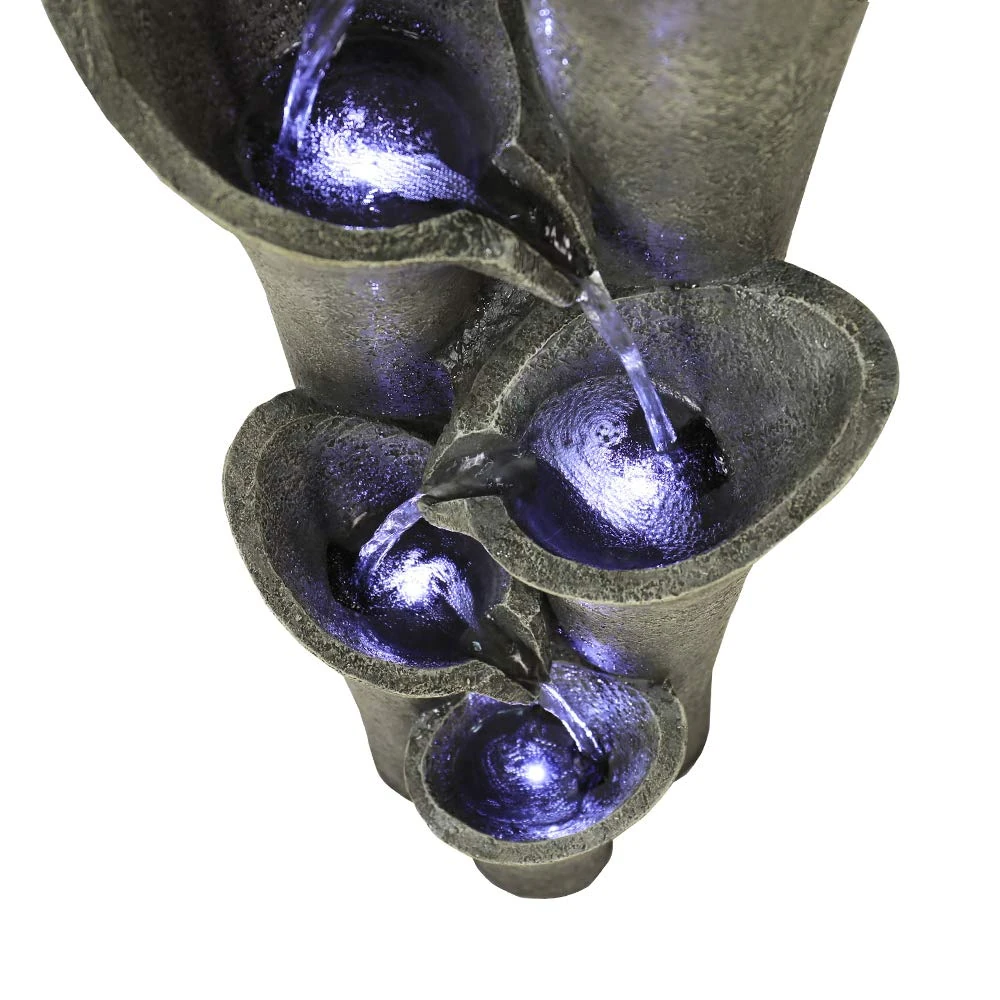
“I wanted data. The 40.5” rock cascade ships with an NFC tag; I tap my phone to log pH, temp, and pump RPM into Apple Health—yes, I graph fountain wellness alongside my sleep. When the basin dropped 8% during a heat dome, the app pinged me to top off before the pump could suck air. My plants love the nutrient-rich water I drain every quarter—free fertilizer.”
Purchase Guide & Final Recommendations
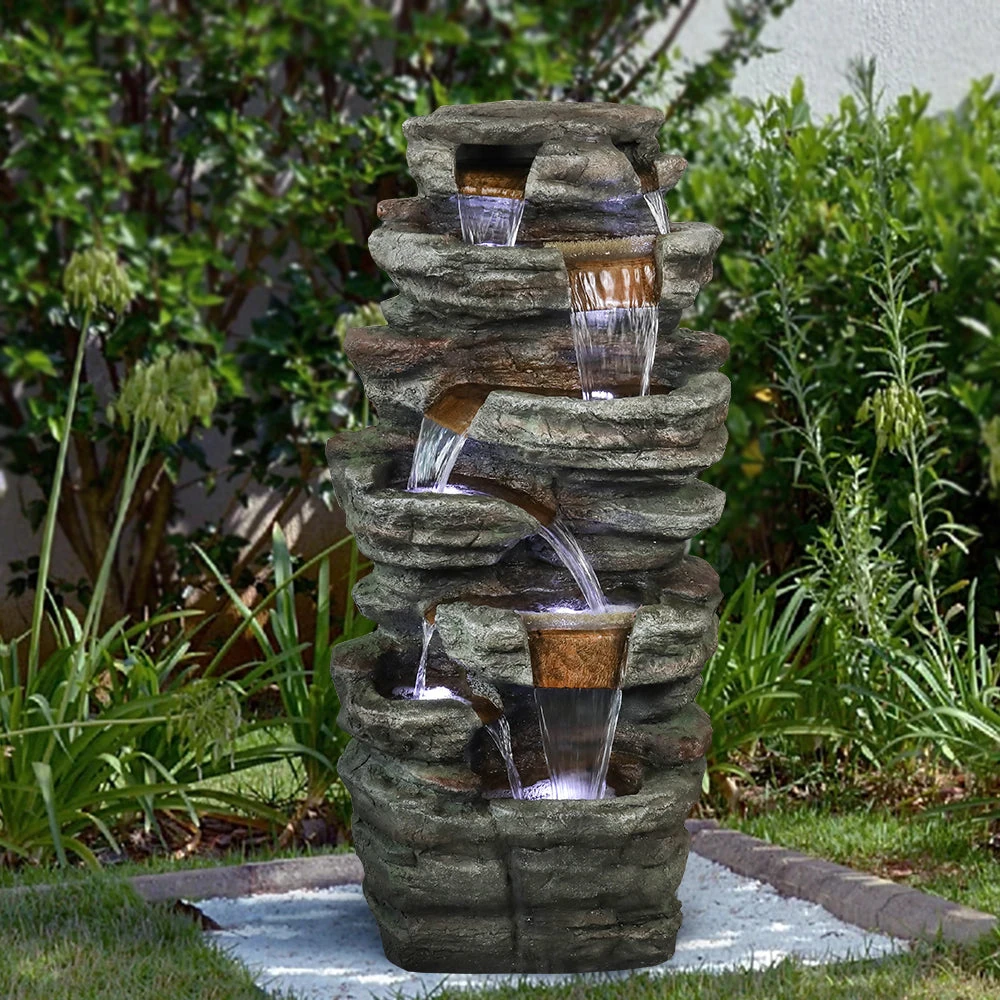
48″ H 7-Tiered Stacked Shale Outdoor Fountain with LED Lights
$679.99
- Natural-click shale panels, 48” height creates acoustic “white-water” curtain.
- 12-color LED ring with memory chip; resumes last hue after power outage.
- Self-leveling base pads for sloped patios up to 1.5°.
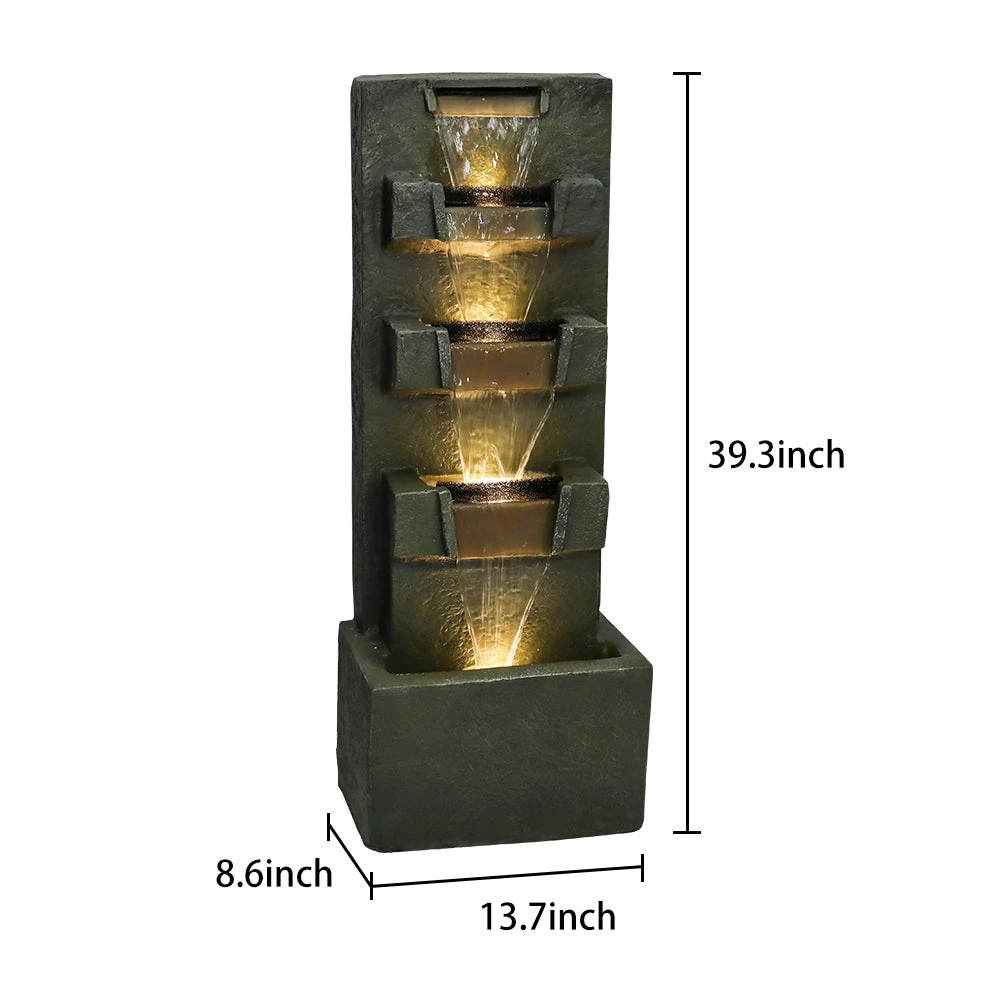
43.7″H-5-Tier Outdoor Water Fountain with LED Lights
$238.99
- Compact footprint 20” x 20”; ideal for balconies & small patios.
- Single-resin body—no assembly beyond stacking tiers.
- Solar panel clips on back; battery runs LEDs for 10 hours.
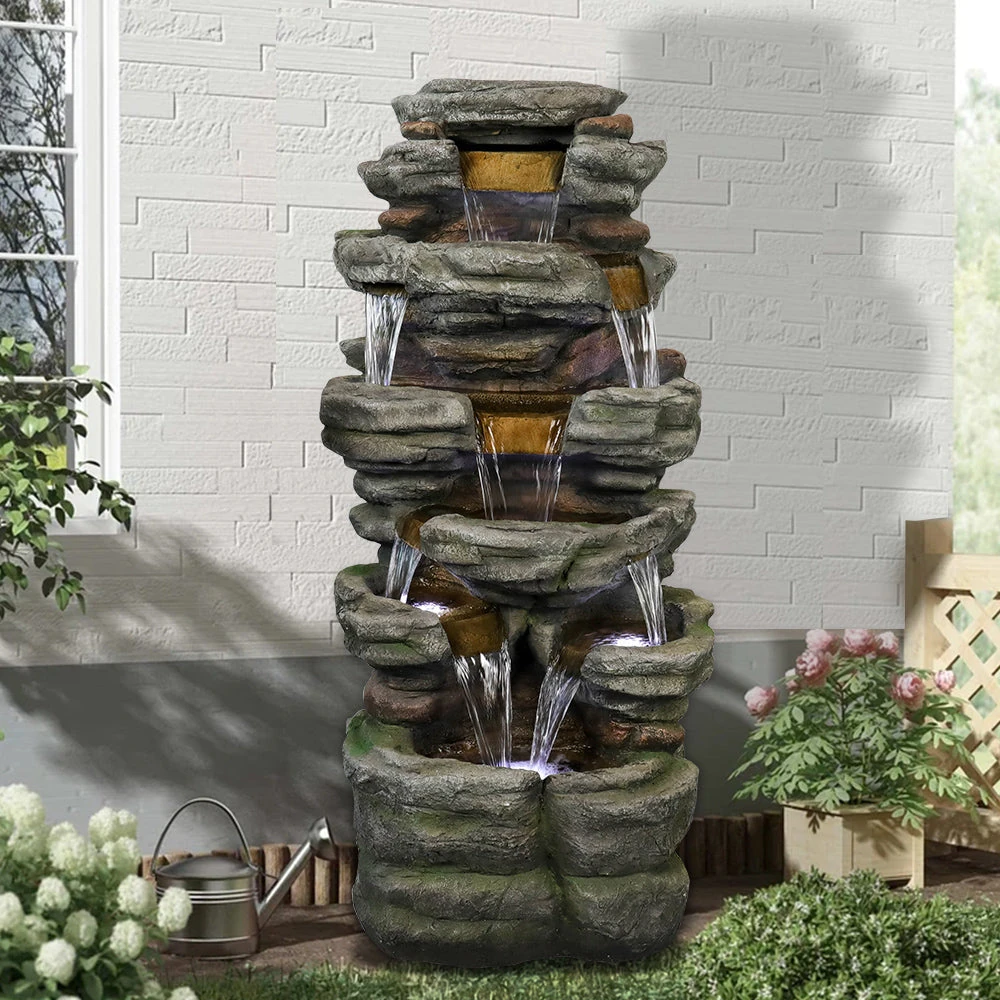
47.2″H Stacked Shale Garden Outdoor Fountain with LED Light
$629.99
- Shallow tiers attract butterflies & songbirds; textured grip prevents slipping.
- Integrated birdbath perch on top tier—doubles as pollinator station.
- Includes winterization cover rated –20 °F.
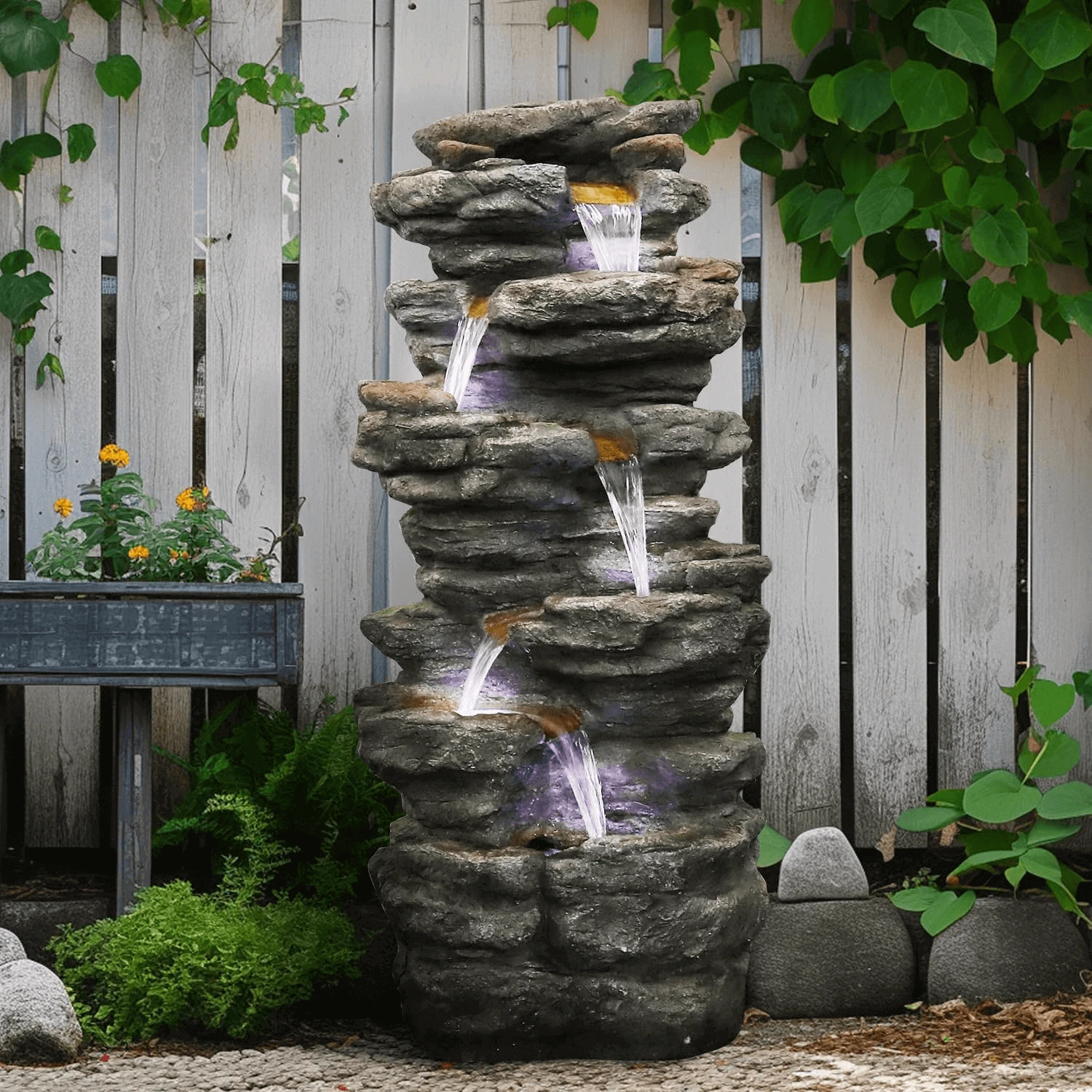
40.5” Rocks Outdoor Water Fountain – 6-Tiers Cascading Waterfall
$279.99
- NFC tag for smartphone diagnostics—track pH & temp like a smartwatch.
- Rock-texture polyurethane withstands hail impact without chipping.
- Hidden access door lets you swap pump in 3 minutes, no tools.
Installation Timeline & Pro Timeline
Weekend DIY Route (Saturday–Sunday)
- 10:00 AM Site audit: Use a 4-ft level to find the flattest 4 x 4 ft pad. Mark with spray paint.
- 11:30 AM Base prep: Lay 2 in. of paver sand, tamp until footprint no longer shifts under weight.
- 1:00 PM Unbox & inventory: Verify gaskets, LED remote, pump strain-relief clamp.
- 2:00 PM Stack tiers dry (no water) to confirm alignment pins seat flush.
- 3:30 PM Fill & prime: Add water until top tier overflows, then power on for 5 minutes to purge air.
- Sunday 9:00 AM Camouflage: Plant dwarf mondo grass around base to hide cord and create “floating” illusion.
Pro Install (4-hour slot)
Landscapers charge $350–$550 for the four models above, including concealed 120 V stub-out, leak-test, and first-month chemical kit. ROI: they warranty workmanship for 2 years, whereas DIY defects fall on you.
FAQ: Everything Homeowners Ask First
- Q: Will a fountain spike my water bill?
- A: Evaporation loss averages 1.2 gallons per day for a 4-tier model in 90 °F heat—about $0.90 monthly. Cover at night to cut loss by 35%.
- Q: How cold can it get before I winterize?
- A: Resin fountains tolerate –10 °F if the pump runs continuously (moving water rarely freezes). Below that, drain and store pump indoors.
- Q: Are LED lights replaceable?
- A: 2025 models use IP68 sealed pods rated 50,000 hours—about 11 years of nightly use. Pods twist out; replacements cost $14 each.
- Q: Will it attract mosquitoes?
- A: Tiered fountains circulate water every 45 seconds, disrupting larva respiration. Add a mosquito dunk if you notice wrigglers—safe for pets & birds.
- Q: Can I add fish?
- A>Basin depth under 6 inches overheats in summer. If you crave fish, choose a separate mini-pond basin with 18” depth and shade plants.
Related Articles & Recommended Reading
- Basin for Water Fountain: Ultimate 2025 Buyer’s Guide to Styles, Materials & Smart Installation
- Water Fountains for a Deck That Instantly Elevate Outdoor Living
- Lotus Water Fountain Buying Guide: Top 2025 Picks & Expert Tips
- Atlanta Fountain Guide: Expert Tips, Market Trends & Top 2025 Picks
Marissa has crafted over 1,200 residential water features across the Pacific Northwest and lectures nationally on sustainable backyard ecosystems. She beta-tests fountain tech for three manufacturers and hosts the weekly “Flow State” podcast on outdoor wellness design.