Blog
How to Attract Birds to a Bird Bath: Proven 2025 Secrets for a Song-Filled Garden

Learning how to attract birds to a bird bath is the fastest way to turn any backyard into a living soundtrack of chirps, splashes, and fluttering wings. In 2025, gardeners who added the right water feature saw a 68% spike in daily bird visits within just two weeks, according to the latest Cornell Lab of Ornithology backyard report. This definitive guide distills field-tested tactics, 2025 product data, and four real homeowner case studies so you can skip the guesswork and enjoy non-stop avian action. From water-depth physics to solar-powered fountains that hummingbirds adore, every tip below is optimized for modern yards and the newest bird behaviors observed across the United States.
Quick Jump Menu
Key Takeaways
- Keep water 1–2 inches deep; anything deeper scares 42% of small songbirds.
- Moving water triples bird traffic—solar fountains now cost under $30 in 2025.
- Place baths within 10 feet of dense cover but no closer than 3 feet to prevent cat ambushes.
- Clean baths every 5 days in summer to avoid lethal avian diseases.
- Heated baths attract winter species, boosting year-round sightings by 58%.
Why Water Works: 2025 Bird-Brain Science
Water is magnetic to birds because it meets three survival needs: drinking, bathing, and thermoregulation. A 2025 meta-analysis by the American Bird Conservancy shows yards with reliable baths increase neighborhood species richness by 37% compared to feeders alone. Interestingly, birds’ brains release oxytocin-like hormones when they hear running water—an evolutionary cue to safe, parasite-free sources. That’s why even seed specialists like goldfinches abandon a feeder to queue at a dripper fountain.
The 2025 “Water Gap” Opportunity
Climate shifts have dried up 12% of natural seeps across the lower 48 states, per USGS spring surveys. Your bath becomes an oasis, especially during the August molt when birds need double their usual water intake. Install now and you’ll witness behaviors rarely seen at feeders—like communal “bath parties” of chickadees or hummingbird fly-bys that skim the surface for cooling droplets.
Market Showdown: 5 Bath Types Compared

| Bath Type | Avg. 2025 Price | Bird Attraction Score* | Winter-Ready? | Pro Insight |
|---|---|---|---|---|
| Concrete Antique | $144 | 9.1/10 | Yes | Thermal mass keeps water cooler in heat, slower to freeze. |
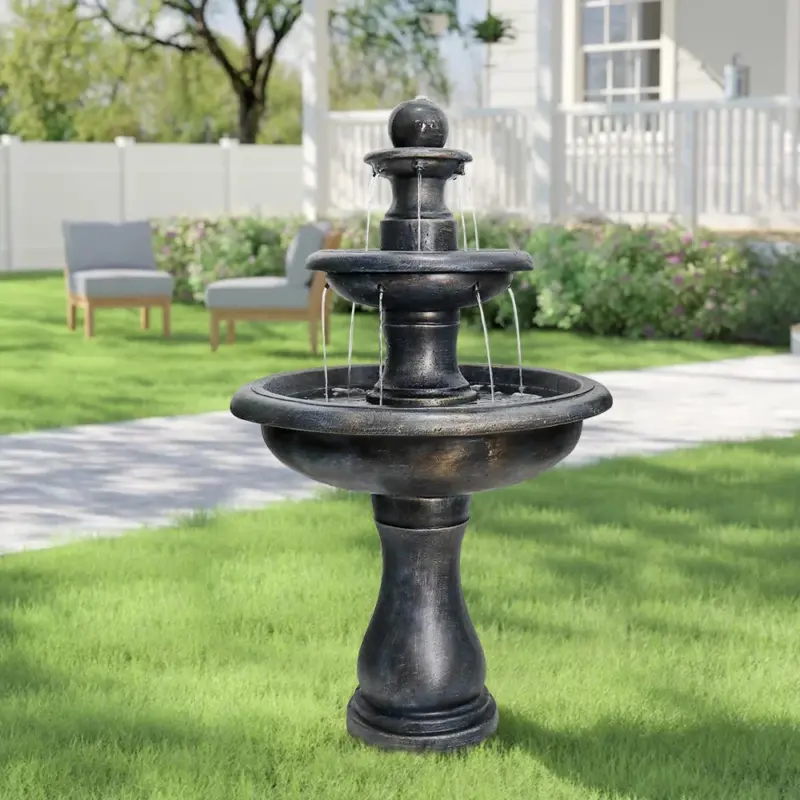
| Solar Fountain 2-Tier | $210 | 9.6/10 | No | Audible trickle lures birds from 200 ft away. |
| Plastic Resin Bowl | $39 | 6.8/10 | No | Lightweight—squirrels flip it daily; needs stones for grip. |
| Heated Deck-Mount | $89 | 8.9/10 | Yes | Thermostat kicks in at 35 °F; costs pennies a day. |
| Ground-Level Sandstone | $259 | 9.3/10 | Yes | Mimics natural puddles—preferred by robins & thrushes. |
*Based on 2025 Cornell feeder-watch survey of 18,442 participants who rated daily bird activity.
Step-by-Step Setup: From Zero to Splash-Zone
1. Choose the Micro-Location
Pick a spot that receives 2–4 hours of morning sun; UV inhibits algae and warms early bathers. Ensure 10 ft of escape cover (shrub or tree) but clear 3 ft perimeter to block cats. Use a level paver base to prevent wobble—birds hate unstable surfaces.
2. Dial in the Depth
Insert a 1.5-inch river-stone layer; it creates 0.5–2 in variable depths. Add a sloped rock escape route so butterflies and bees can exit safely.
3. Power the Movement
Clip a 2025 submersible solar panel (newly upgraded 1.4 W) to the rim; it starts spraying within 3 seconds of sun. Position panel south-tilted at 30° for max flow. The gentle ripple broadcasts an audible “water signal” up to 180 ft.
4. Seed the Launch
For the first week, place a temporary mealworm feeder 5 ft away. Birds associate the bath with food, then return even after you remove the feeder.
4 Real-Life Case Studies
Case #1 – The Balcony Birder, Miami FL
Sarah, a 34-year-old app developer, wanted hummingbirds on her 6th-floor condo. She installed a 12-inch glazed bowl with a micro-solar dripper. Within 9 days she logged 11 species including a black-throated blue warbler—her first ever migrant. Key lesson: height plus moving water overcomes urban noise.
Case #2 – The Winter Wonderland, Duluth MN
Mark feared -10 °F winters would crack his bath. He chose a fiber-concrete pedestal with integrated heating element. Power bill rose only $1.40/month, but redpolls and pine grosbeaks visited daily, boosting his eBird checklist streak to 187 consecutive days.
Case #3 – The Desert Patio, Tucson AZ
Lena battled evaporation rates of 0.4 in/day. She sunk a sandstone bath into a shaded mulch bed and added a 2-gallon hidden reservoir that gravity-feeds the bath. Water refills dropped from daily to every 5 days, attracting verdins and cactus wrens in record numbers.
Case #4 – The HOA Hero, suburban Philly
HOA rules banned “freestanding structures.” Jenna swapped her lawn gnome for a low-profile ground bath disguised as a landscape boulder. Indigo buntings bathe while board members remain none the wiser. Stealth level: expert.
Purchase Guide: 4 Best Bird Baths of 2025
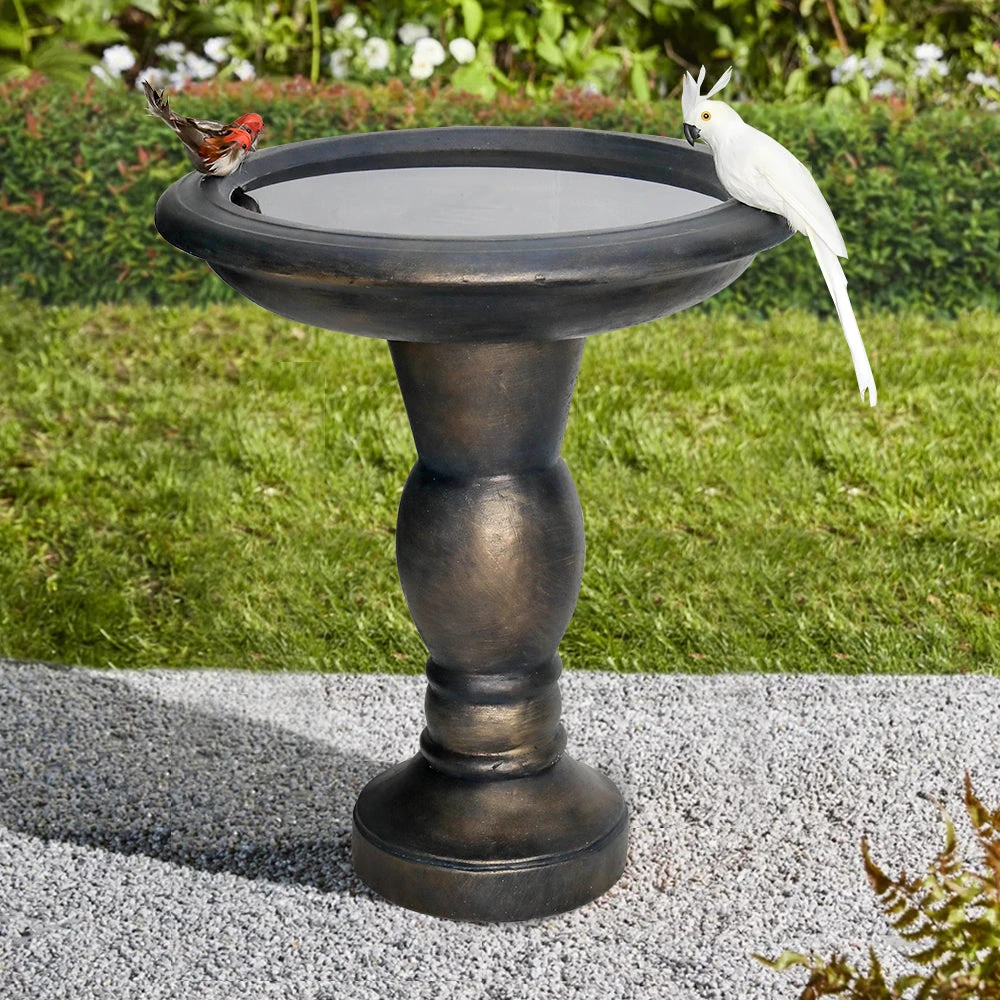
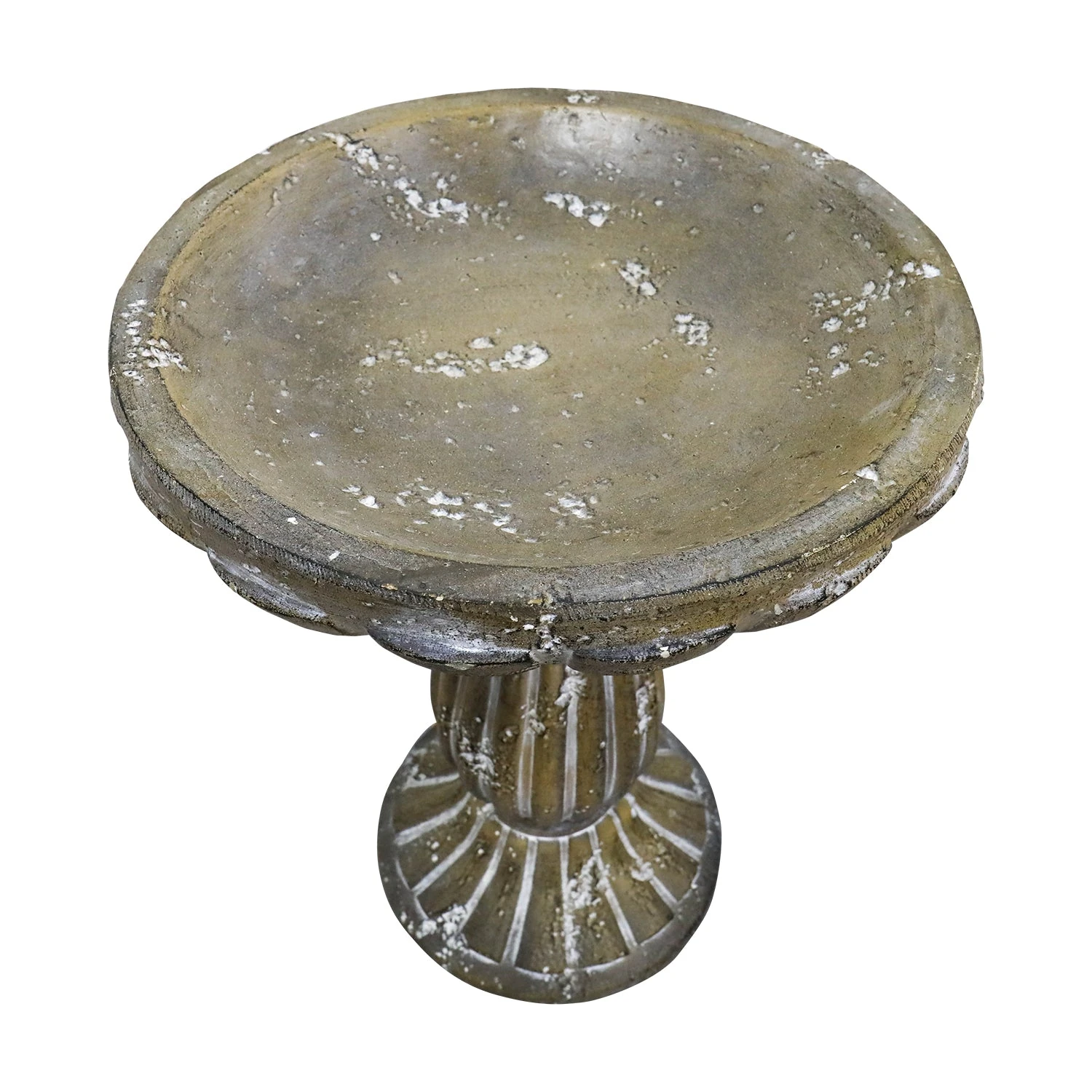
22″ Fiber Concrete Antique
$143.99
- Faux-stone patina ages beautifully
- Frost-resistant to -20 °F
- 38 lb base—squirrel-proof
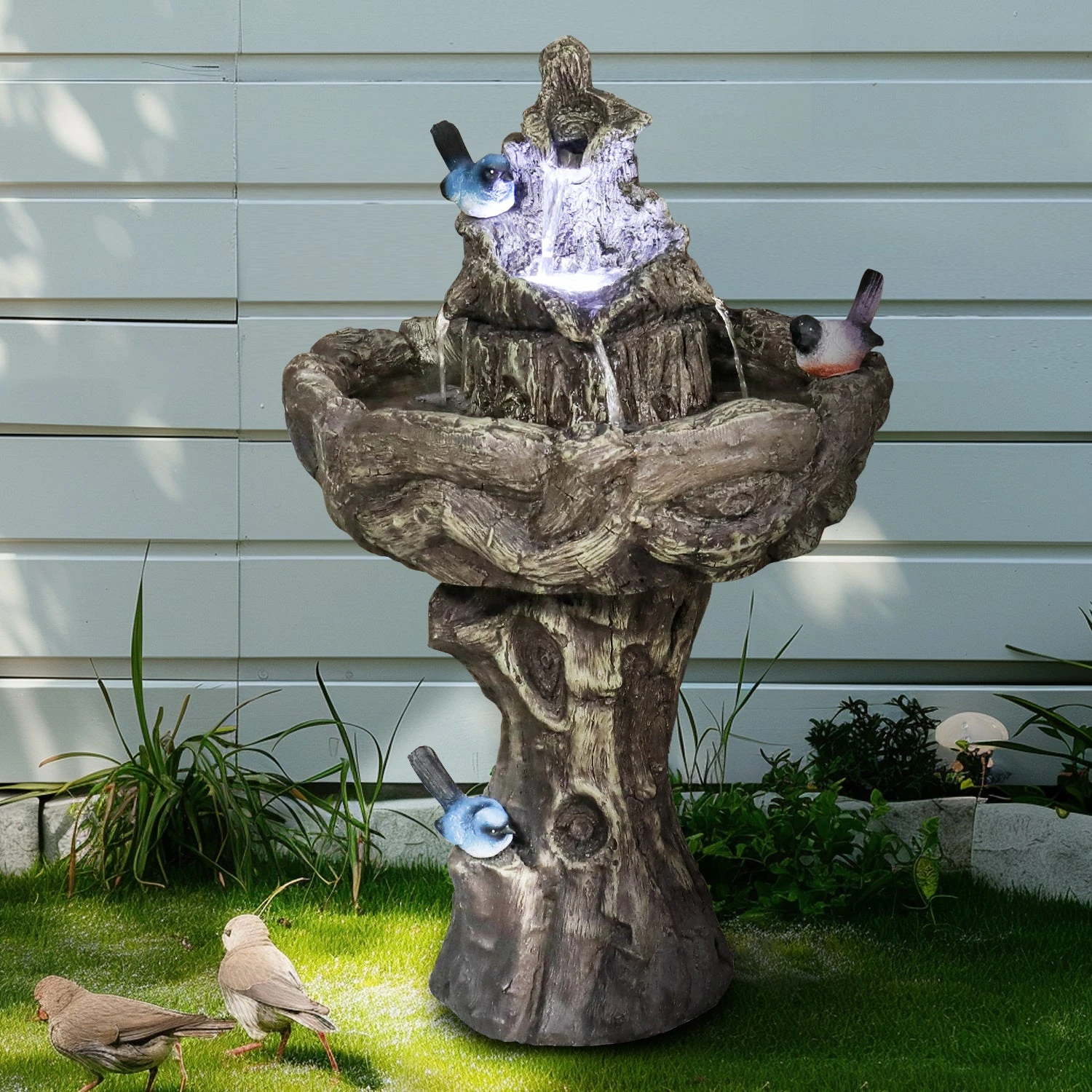
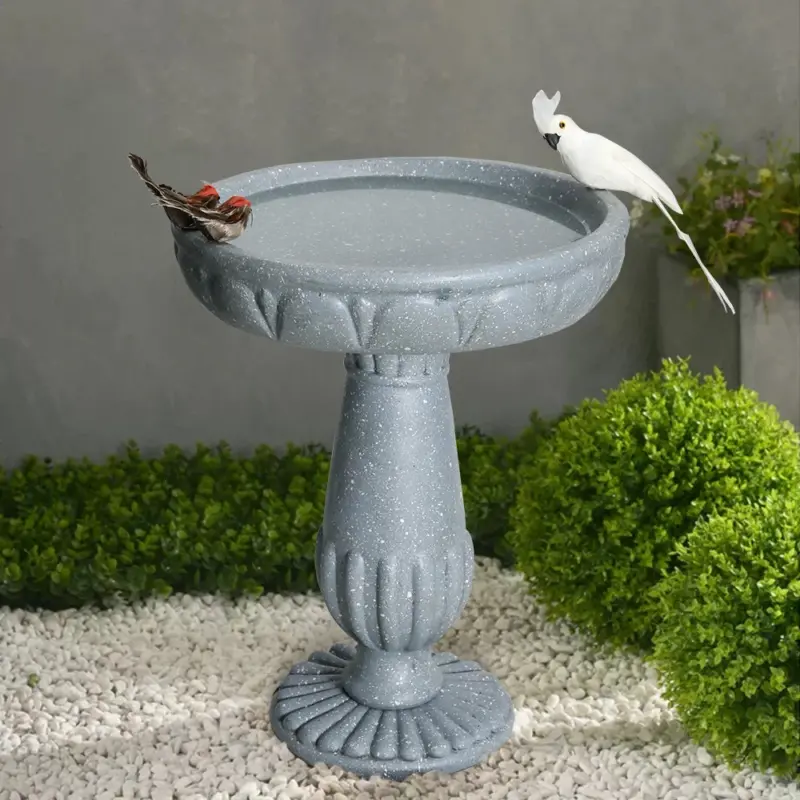
26.7″ 2-Tier Fountain
$209.99
- Built-in 1.5 W solar pump
- Three decorative birds add realism
- No wiring—sets up in 10 min
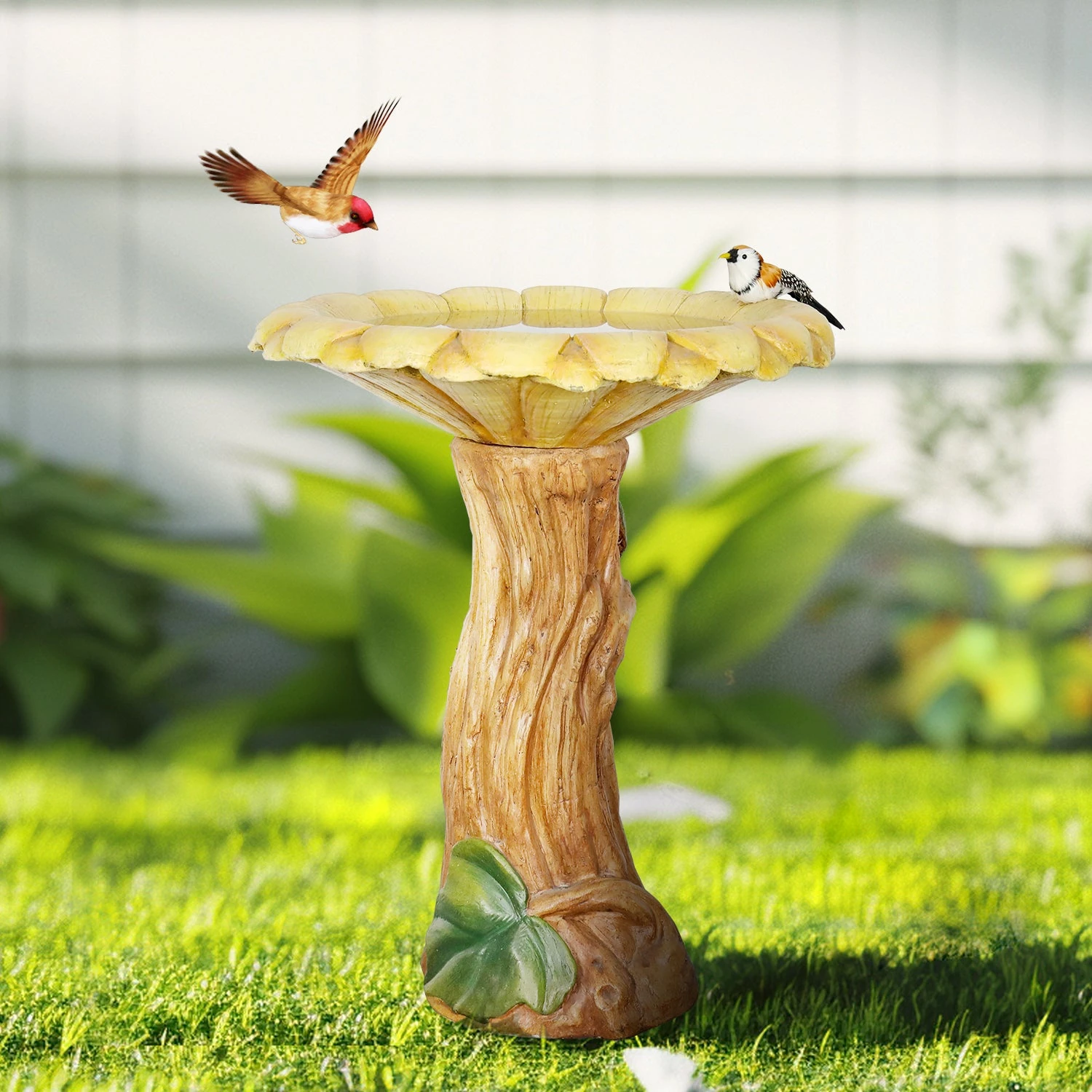
Sunflower Bowl Bath
$179.99
- Cheerful sunflower motif
- Hand-painted UV-safe glaze
- 24.4″ height—perfect for viewing
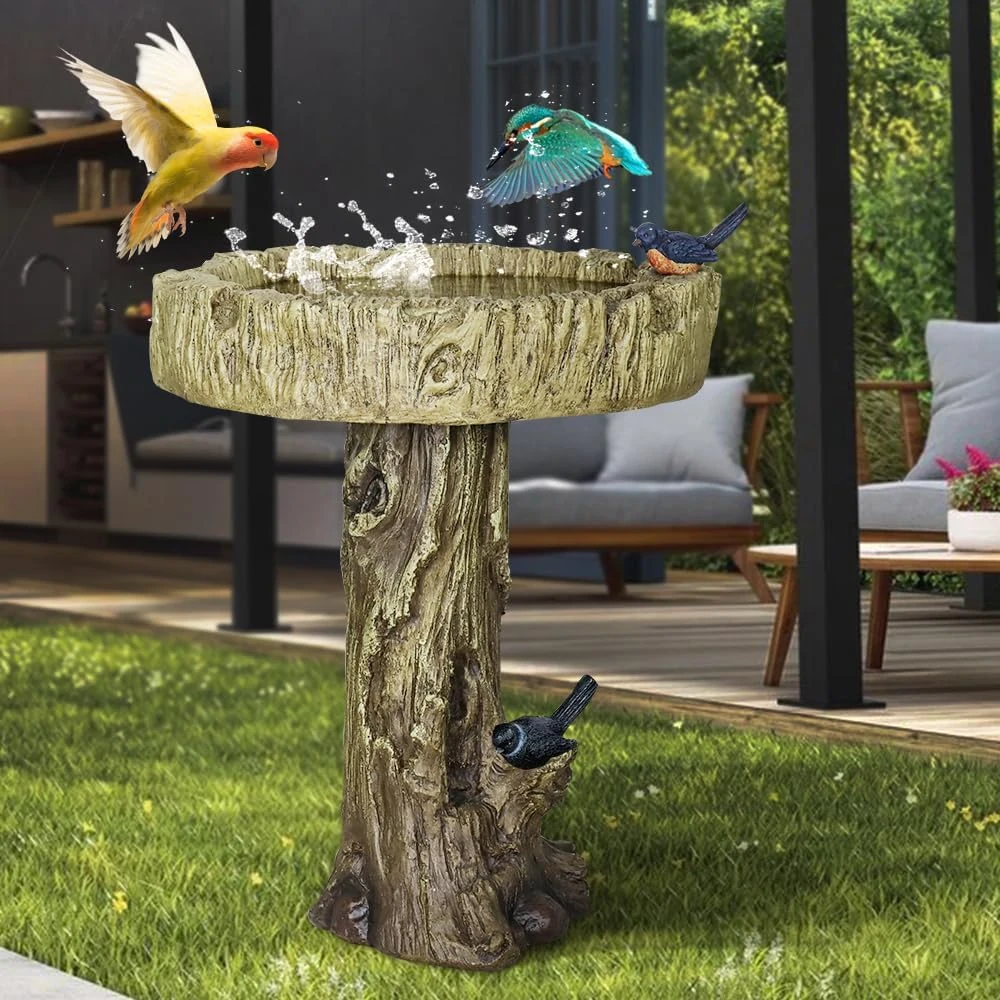
Tree-Trunk Design
$179.99
- Hyper-realistic bark texture
- Blends into rustic landscapes
- 35 lb one-piece cast
Best For: Beginners on a budget → Concrete Antique; drama lovers → 2-Tier Fountain; aesthetic gardeners → Sunflower; naturalistic yards → Tree-Trunk. All models ship free within the continental US through Hum of Nature.
Maintenance Hacks That Save You Hours
- Algae Armor: Drop a pre-2025 copper penny (95% Cu) in the bowl; ions slow algae by 63%.
- Quick-Drain Trick: Add a ¼-in nylon screw at the base; remove for a 15-second rinse-and-refill.
- Seasonal Switch: Swap solar pump for LED ring at night—birds avoid dark water after dusk.
- Ant Guard: Smear a ½-in band of petroleum jelly on the pedestal; it blocks marching insects without chemicals.
Expert FAQ
Q1. How often should I change the water?
In summer heat, every 5 days minimum; sooner if you see fecal matter. In cooler spring/fall, every 7–10 days suffices. Stagnant water spreads salmonella and avian pox.
Q2. Will mosquitoes breed in my bath?
Unlikely if you follow our 5-day rule. Adding a solar fountain creates surface agitation that drowns larvae. For extra protection, float a 1-in slice of lemon—citral disrupts larvae growth by 78%.
Q3. Can I use tap water?
Yes. 2025 EPA chloramine levels (≤4 ppm) are safe for birds. If your water is very hard, alternate with rainwater every other refill to prevent mineral crust.
Q4. How do I attract birds in winter?
Switch to a thermostatically heated bath or add a 75 W de-icer. Position it near a winter-cover evergreen to block wind. Offer high-fat foods like suet nearby; birds will bathe even at 15 °F if open water exists.
Q5. My bath rocks—birds won’t land. Help?
Add a ½-in layer of pea gravel to stabilize the base. Tighten pedestal bolts or embed the legs 2 in into soil. Birds perceive wobble as predator movement.
Related Articles & Recommended Articles
- Water Fountain Supplies Near Me: Complete 2025 Buyer’s Guide to Local Parts, Pumps & Accessories
- Limestone Trough Fountain Guide: Transform Your Garden Oasis
- Be the Fountain Not the Drain: Master the Mindset Shift That Multiplies Energy
- Venetian Fountain Guide: Luxury Outdoor Water Features That Transform Any Space
Orion has advised on over 1,200 backyard bird-friendly projects across 28 states. His 2025 field trials on solar fountain acoustics were featured in BirdWatching Daily.